
King and Queen OCIS Is Not a Warrant Register
Virginia has no single public statewide warrant database. OCIS is the public case-information route for eligible adult criminal JDR cases, General District criminal and traffic cases, and participating Circuit courts. Some Circuit coverage is not universal, and restricted matters may be omitted.
The Virginia Courts case-information hub is a useful first online stop. It does not certify that a person has no warrant. Ask the return court for a current status, especially if a case shows an old failure-to-appear event or a recent payment.
How to Search for a Warrant in King and Queen County
Use the public court search to find a case, not to make a final warrant decision. Virginia OCIS supports name, case-number, and hearing-date searches. For a personal check, use the spelling on the summons, citation, or court paper, and have the return court ready to select.
The county sheriff does not publish a warrant search page. The sheriff links residents to OCIS and the local court pages, so the record path changes with the court that issued or controls the process.
- Open Virginia’s OCIS route from the court-information hub and acknowledge the search disclaimer.
- Search the name as it appears on the court paper, then try a partial form if the first search misses the case.
- Select General District Court for adult traffic or misdemeanor matters, Circuit for felony files, or JDR for family and juvenile process.
- Use the GDC local selector when checking an adult traffic or misdemeanor case; payment links are separate.
- Call the return clerk to confirm process status. Use the sheriff for service questions; use FOIA for existing records or policy, not an instant status answer.
Search King and Queen County Warrant Records by Court
The local GDC search requires the court to be selected before a case-number lookup. Name and hearing-date searches can be narrowed by the available court controls. The King and Queen GDC selector is for case information; it does not show a separate sheriff-maintained warrant field.
The screenshot below shows the public court-selection and search interface without a selected person or result. It is a path to the local docket, not a warrant clearance certificate.
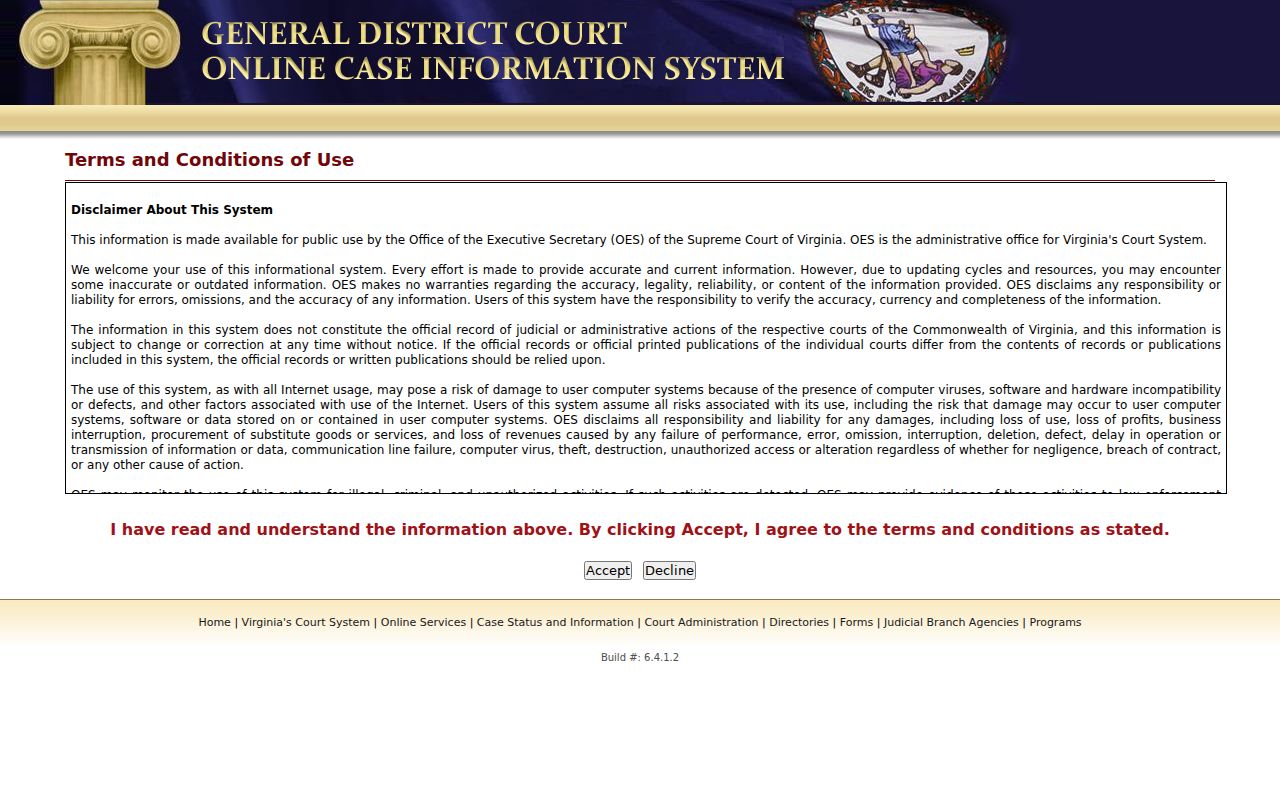
Before relying on a match, note the court, case number, charge, and last hearing date for the clerk call.
King and Queen County Warrant Search Fields
OCIS offers three main modes. A name entry may be partial, with at least two characters; the help page recommends using the spelling on a court document. A date of birth is not listed as a public search field, though it can help a clerk distinguish a common name.
The statewide interface can include court level, hearing time, hearing type, and courtroom filters. JDR display limits apply to some details.
The official King and Queen General District Court page identifies the local clerk and online case route. This image is an office reference, not a result record.
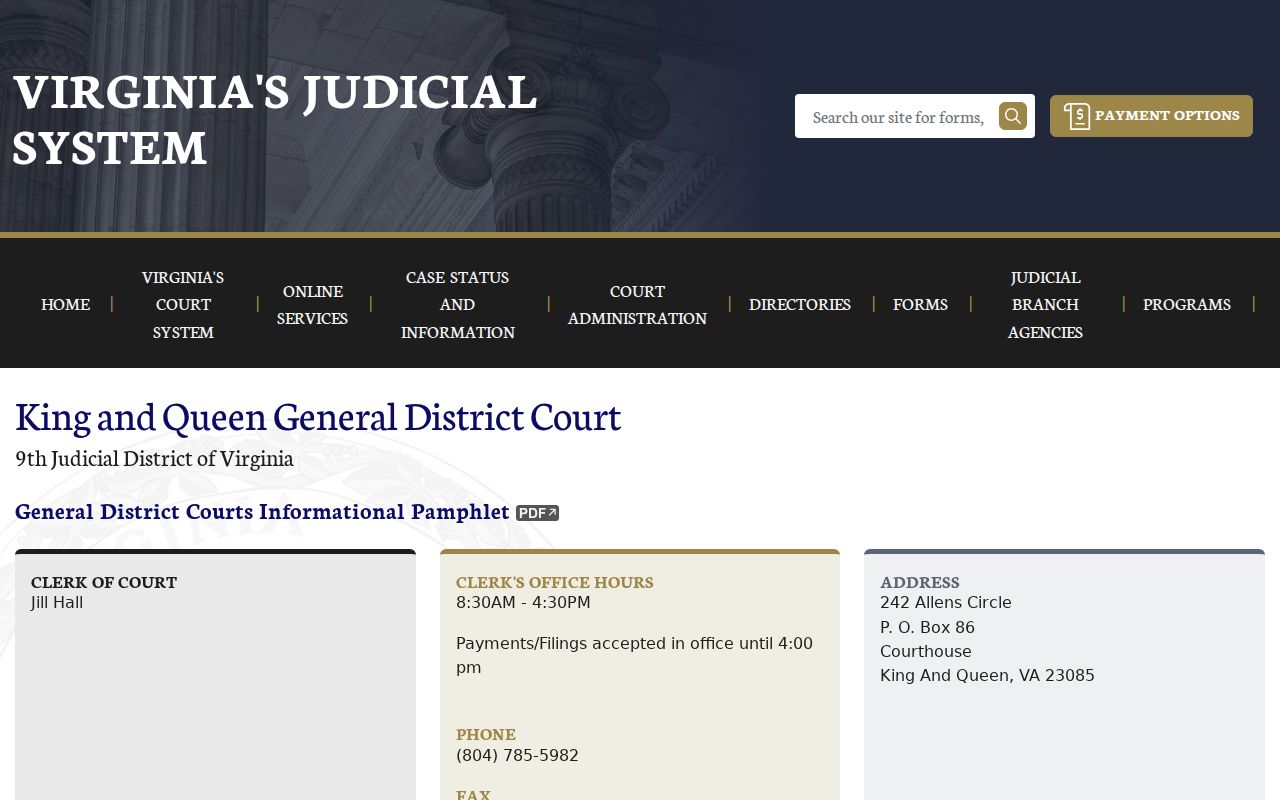
Compare the search options with the court paper before narrowing a personal lookup.
| Field Label | Type | Required | Notes |
|---|---|---|---|
| Name | Text | Yes for name search | Partial entry allowed; at least two characters |
| Case number | Text | Yes for case-number search | Select one court; local prefix chart not published |
| Hearing date | Date | Yes for date search | MM/DD/YYYY or date picker |
| Court level | Multi-select | Optional | Circuit, General District, J&DR, or all |
| Hearing details | Text or selector | Optional | Time, type, courtroom, complainant, or unit number when available |
How to Read King and Queen County OCIS Results
A case result can show the court, case number, defendant, offense date, hearing date, charge, and Virginia Code section. Case Details may add appeal, hearing, disposition, or service-of-process information when entered by the local court.
Those labels describe a case record. They do not automatically answer whether a warrant is now active, was recalled, or has been served. Ask the clerk to confirm the current status and the authorized next step.
What a King and Queen County Warrant Search Returns
OCIS returns limited case information, not a full warrant document. Use the row to identify the right court file, then confirm any current process with that court. The local warrant-number format is not published, and the statewide help examples are not a county prefix guide.
| Case number | Clerk-assigned identifier; no local warrant-number format was found. |
|---|---|
| Charge | Offense description and Code section, when present. |
| Court | Shows which court’s case record was located. |
| Bond | Case-specific; the public row may not show a current amount. |
| Process | Service or disposition details may appear, but confirm status with the clerk. |
Local warrant format not published OCIS examples GT, CR, and JA explain court numbers but are not verified King and Queen formats.
King and Queen Clerks Confirm the Process
Use the court named on the paper. Jill C. Hall’s GDC office handles adult misdemeanor and traffic files; Hattie M. Robinson’s Circuit office handles felony and capias records. Shannon F. Meadowcroft’s JDR office handles family, support, and juvenile process, with confidentiality limits and limited local counter hours.
The official Circuit Court page identifies the felony court and clerk. Its image provides a location reference, not a universal county warrant counter.
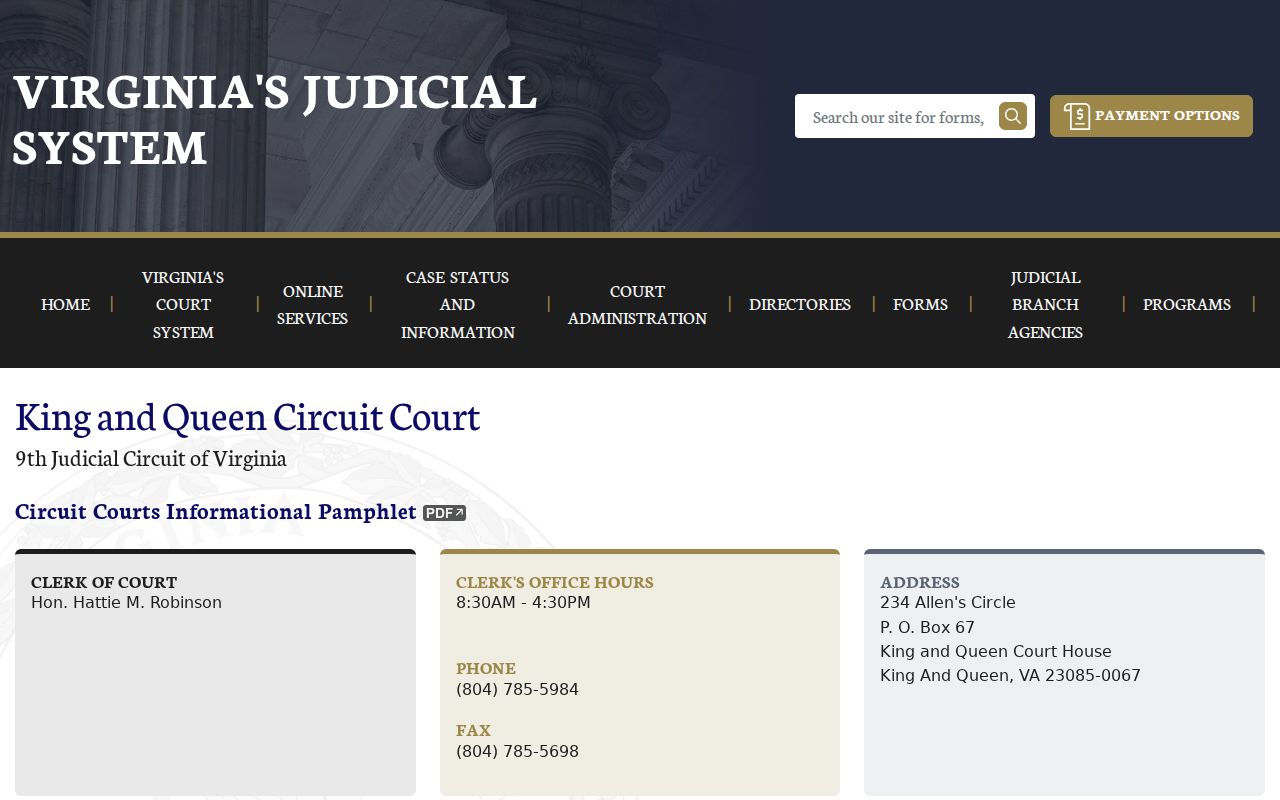
For a court case, the clerk can say what file or process question belongs there; the sheriff handles service questions.
Where King and Queen County Warrants Are Checked
GDC is the first court contact for adult traffic and misdemeanor process. Circuit handles felony and indictment matters. JDR covers family, support, juvenile, and related cases, where public display is narrower. There is no incorporated city, municipal court, or separate justice-of-the-peace court in the county.
The Sheriff’s Office can route a service inquiry. Virginia has no single public warrant system, and federal process is outside OCIS. If an eligible case does not appear, check the proper court and ask its clerk rather than treating an empty result as a clear status.
The county's General District Court page describes the local traffic and misdemeanor court and its clerk.

Virginia FOIA and Restricted King and Queen Records
Virginia FOIA can request existing public records from the office that holds them. It cannot force the county to build a new warrant-status answer. Adult arrestee identity and status are treated differently from investigative files, and juvenile records and many JDR details are restricted.
A request should name an existing policy, return record, or date range and ask for a cost estimate. The county says requests may be sent by mail, fax, email, phone, or in person, with a five-working-day response framework.
The county FOIA officer is listed on the county request page; verify the sheriff contact discrepancy before sending sensitive records.
Access and Restricted Warrants
Some process is withheld from ordinary public searches. Juvenile records, protective-order matters, sealed process, and investigative material have access limits. The GDC system excludes certain protective-order, civil-commitment, emergency-custody, and medical-emergency matters.
A blank OCIS result may also reflect a different court, spelling variation, data-entry timing, or a federal matter. It is not proof that no warrant exists.
Key Rules:
Virginia Code § 2.2-3704 covers reasonably specific requests for existing records.
Virginia Code § 2.2-3706 addresses law-enforcement records and adult arrestee identity/status.
Virginia juvenile-record provisions restrict identifying details in juvenile cases.