
No County Warrant Roster Was Located
The King and Queen Sheriff's Office posts no public active-warrant search or most-wanted roster for King and Queen County. Its page links to courts and Virginia case-information services. Even so, an empty name search is not a countywide clearance result. Start with the state court index, then ask the return court about process status. No dedicated warrant line, walk-in surrender window, or guaranteed phone lookup is published.
How to Check for a Warrant in King and Queen County
Virginia's public Online Case Information System, or OCIS, is the first stop for a King and Queen County warrant search. It covers eligible adult criminal, traffic, JDR, and participating Circuit Court case entries. Remember what it is, though. OCIS is a case index, not a complete warrant list, so the return court remains the source for whether a warrant or capias is active, recalled, executed, or tied to a new appearance date. When you search, have the name exactly as written on the court paper, plus a case number or hearing date if you have one. Pick the court level that fits the matter, since a traffic ticket and a felony charge sit in different dockets. If the result is a personal concern, confirm it with the clerk before you visit a courthouse or pay anything.
- Open the Virginia Courts case-information hub and choose the OCIS route.
- Search by name, case number, or hearing date. Select King and Queen and the court level when those filters apply.
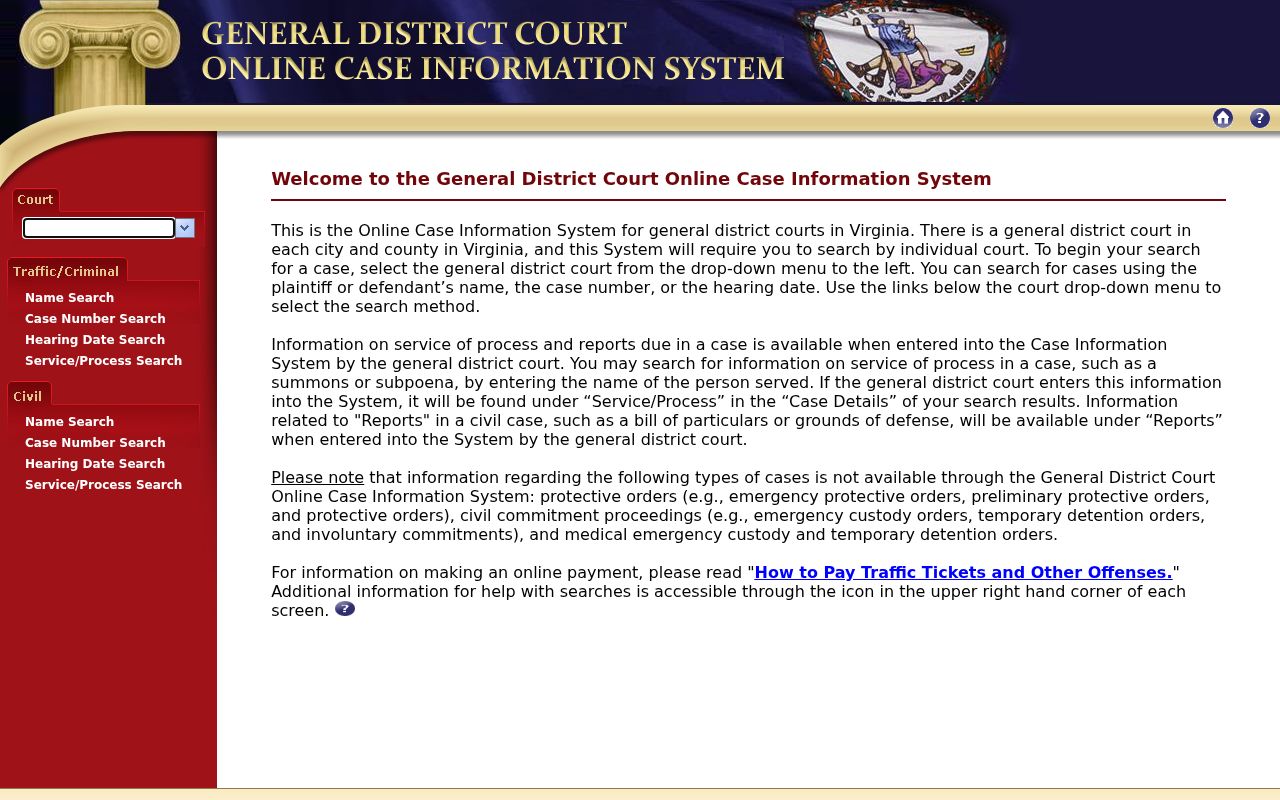
- For adult traffic or misdemeanor cases, use the General District Court search and select King and Queen.
- Call the return clerk for process status. Use the sheriff for a question about service or the proper agency.
- If records or a written policy are needed, send a specific Virginia FOIA request for existing material; speak with a lawyer about legal options.
King and Queen County's General District Court page identifies the local adult traffic and misdemeanor court. Its online case route is a docket search, not a warrant-status certificate.
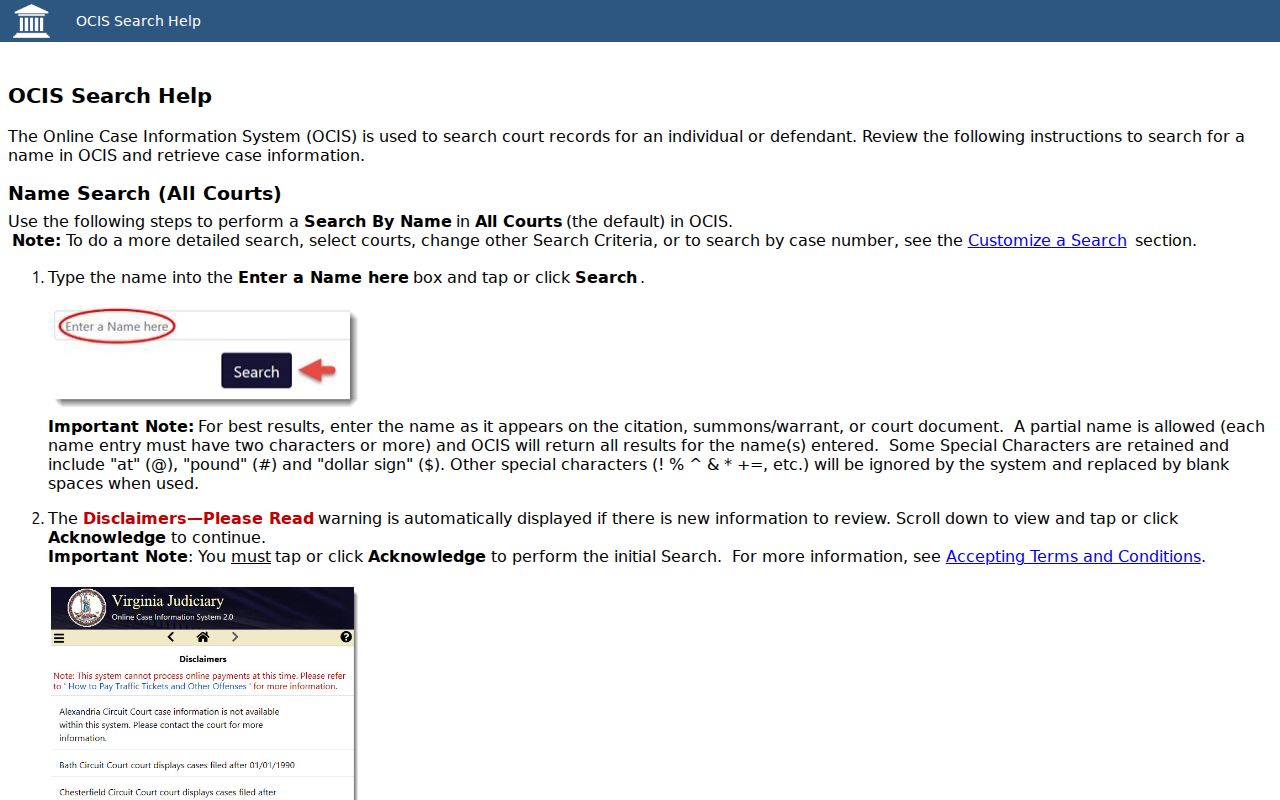
King and Queen OCIS Search Controls
The official OCIS search help describes three ways into the index: by name, by case number, or by hearing date. Names can be partial, as long as you enter at least two characters. Case-number searches need a selected court first. The local GDC selector takes you to that court's case index, not to a separate King and Queen County sheriff warrant database. The OCIS help page lays out these controls and explains why court selection and a case number can matter.
| OCIS Control | What It Does | Local Use |
|---|---|---|
| Search By | Name, case number, or hearing date | Choose a mode before entering details |
| Court Level | Circuit, General District, or J&DR | Narrow the search to the likely return court |
| Court | Selected court or all available courts | A case-number search requires one court |
| Hearing details | Date, optional time, type, courtroom | Useful when locating a missed appearance |
Types of Warrants in King and Queen County
In King and Queen County, an arrest warrant follows a probable-cause review. A bench warrant, often tied to failure to appear, addresses a missed date or a court order. A capias may relate to an indictment or show-cause matter. Search warrants concern evidence, not personal status. The paper and the court named on it control the next step, because a missed traffic date or an older case does not create the same process in every court.
Three King and Queen Courts Split the Records
King and Queen County has no single warrant clerk. Circuit handles felonies and indictments, General District handles adult misdemeanors and traffic, and JDR handles juvenile, family, and support matters. A regional magistrate may issue process without keeping a county trial-court docket. The Virginia case-information hub offers separate court paths, not a live warrant register.
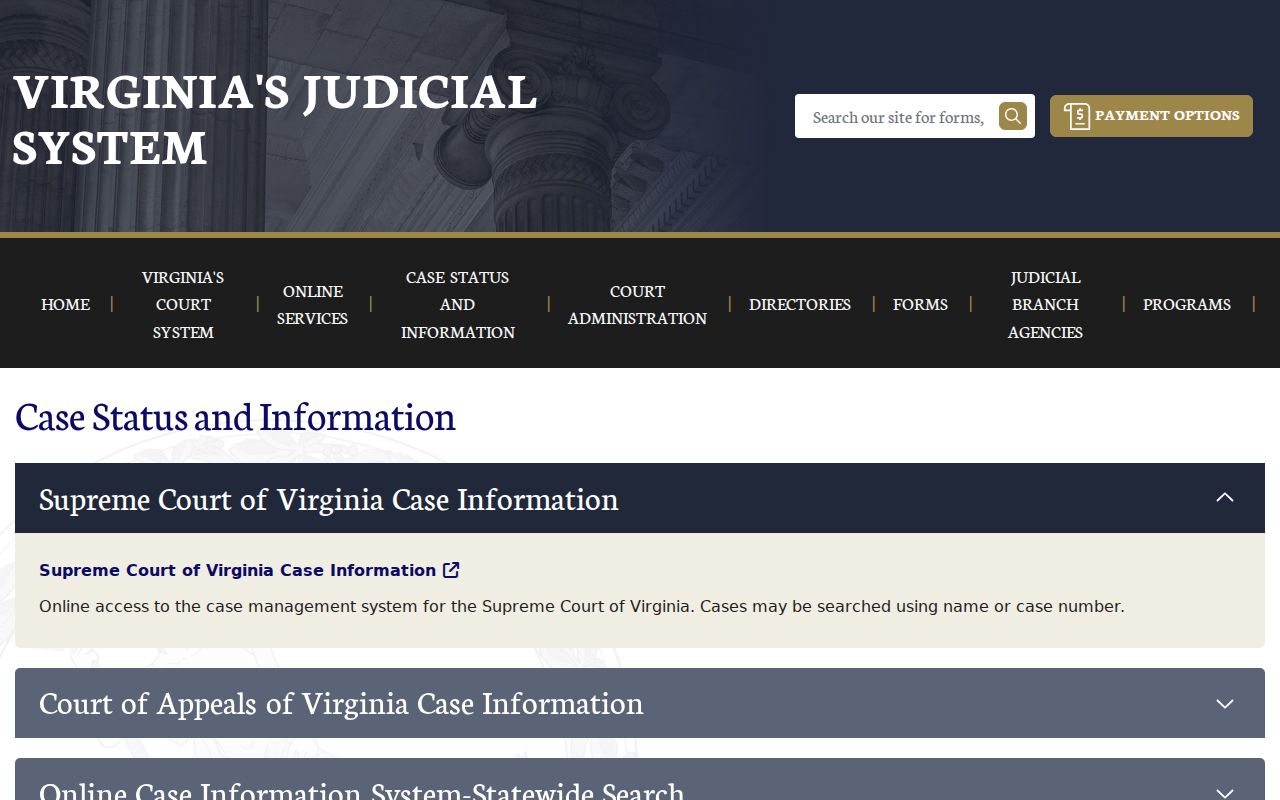
The state hub presents separate court-information paths for King and Queen County. It does not merge them into a live active-warrant register.
| Office | Records and Process | First Contact |
|---|---|---|
| Circuit Court | Felonies, indictments, appeals, capiases | Clerk of the Circuit Court |
| General District Court | Adult misdemeanors, traffic, preliminary hearings | GDC Clerk |
| JDR Court | Juvenile, family, support, custody matters | JDR Clerk, with access limits |
What a King and Queen County Warrant Record Shows
An OCIS case entry may show the court, case number, party, charge, offense and hearing dates, and Code section. Case details may add disposition or service events. Those fields identify a file, but only the return court can confirm current warrant status.
| Process number | Clerk-assigned case number; the local warrant-number format is not published. |
|---|---|
| Party and charge | Name, offense date, charge description, and Virginia Code section when shown. |
| Issuing or return court | Circuit, General District, or JDR, depending on the case. |
| Bond direction | Set by a judge or magistrate; no countywide warrant bond schedule was found. |
| Process status | Ask the court whether it is issued, served, returned, recalled, or otherwise changed. |
Local warrant number format not published OCIS examples GT, CR, and JA are not a King and Queen County prefix chart.
How Service and Court Returns Fit Together
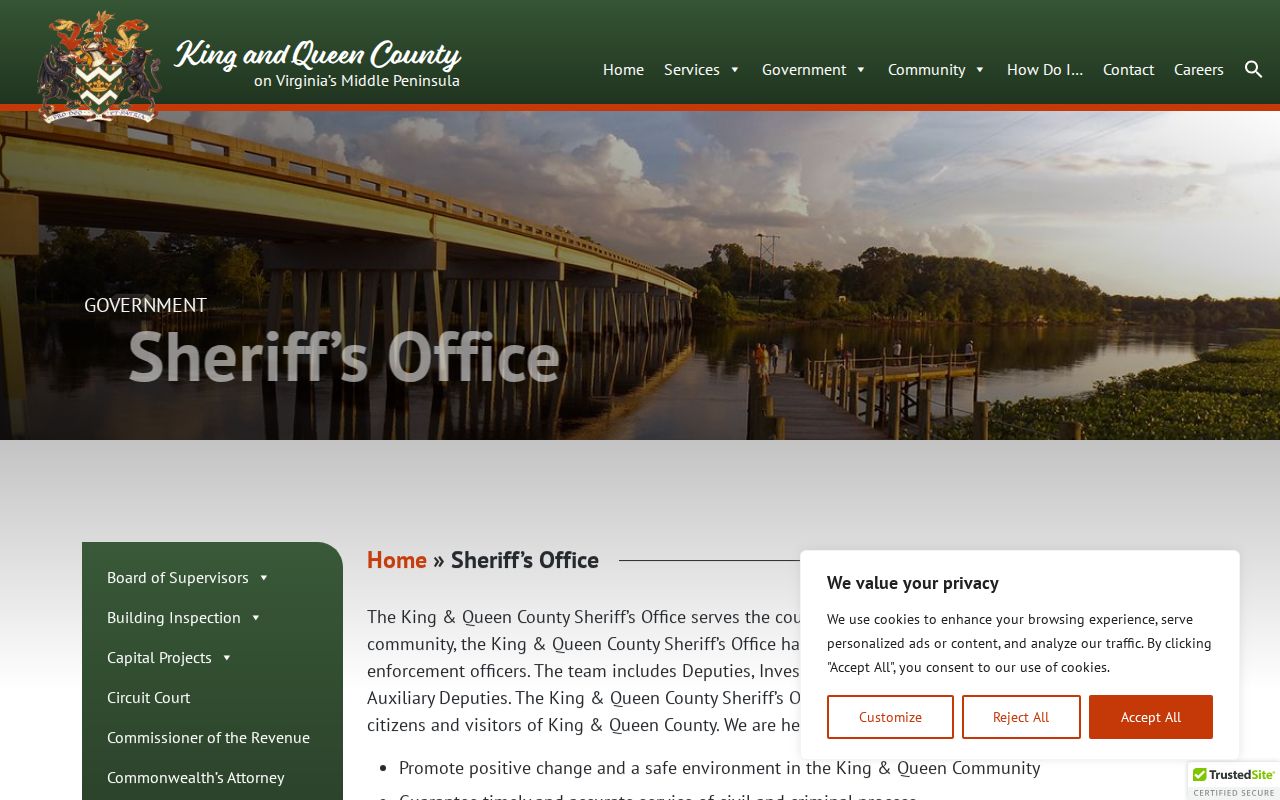
A judge or magistrate issues process, the clerk records it, and an authorized officer serves it or files a return. A jail officer may execute process on someone already held. Ask the return court whether it was served, recalled, or changed in some other way. In King and Queen County, the sheriff's service role and the issuing court's recall role are separate jobs. The Sheriff's Office page describes process service, so ask that office about service and ask the court about changing its order.
Who Issues and Serves King and Queen County Warrants
Judges and magistrates may issue arrest process in King and Queen County. Circuit, GDC, and JDR keep different case types. The King and Queen Sheriff's Office is the principal local service agency, and other authorized officers can also execute process. The county's official Sheriff's Office page describes process service and links to court and OCIS resources. It does not offer a public warrant search.
King and Queen County Sheriff’s Office
242 Allen’s Circle, P.O. Box 38
King and Queen Court House, VA 23085
(804) 785-7400
King and Queen Process May Reach Saluda
The Middle Peninsula Regional Security Center in Saluda holds inmates for King and Queen, Essex, King William, Middlesex, and Mathews. King and Queen County courts sit at King and Queen Court House, so custody questions and case status go to different offices. The facility's inmate listing is a custody reference, not a warrant index. An absent name does not rule out unexecuted process. Confirm the case with the return clerk.
What to Do If You Have a King and Queen County Warrant
Call the court named on the case to ask whether process is active, whether a judge must review a recall request, and which appearance or payment steps are allowed. Circuit, GDC, and JDR differ on these points. No countywide bond amount or walk-in surrender window is published for King and Queen County. Consider consulting a Virginia attorney before appearing. Have the case number, order or citation, and payment proof ready, and ask for the next date or court action in writing.
Important: Confirm the return court’s instructions with counsel before appearing. Local sources do not promise a walk-in process or same-day release.
Ask Before a King and Queen Warrant Trip
Before you drive to any King and Queen County counter, ask a few things first. Which office is open that day, and does a judge need to act? Also ask what motions or payments the clerk accepts, and whether the visit could end in custody. JDR sits only limited local days, and GDC stops filings and payments at 4:00 p.m. One more caution: a payment receipt does not recall a separate failure-to-appear process. Ask when OCIS should reflect the court order, and keep the written order or receipt.
Public Access to King and Queen County Warrant Records
Virginia FOIA covers records that already exist, not a new yes-or-no warrant answer for King and Queen County. Juvenile, many JDR, and sealed records may be withheld, and adult-arrestee identity and status follow disclosure rules of their own.
Key Rules:
Virginia Code § 2.2-3704 addresses specific requests for existing records and the response period.
Virginia Code § 2.2-3706 covers adult-arrestee identity and status alongside investigative records.
Virginia juvenile-record law limits access to identifying juvenile information.
Virginia FOIA Requests Need Existing Records
A FOIA request works best when it asks for something concrete. Request an existing process policy, a blank recall form, or a defined date range of records, and name the King and Queen County office that holds them. The county accepts requests by mail, fax, email, phone, or in person. No form is required. Charges run at actual cost; anything under $12 is waived, and a deposit may be demanded above $200. The response framework is five working days, with lawful extensions. Tina Ammons is the county FOIA officer. Note that the Sheriff's entry on its FOIA page differs from its contact page, so verify before sending sensitive material. The county FOIA page lays out the rules, and Virginia Code § 2.2-3704 governs what must be produced. Ask for existing records, not a newly created status answer.
Warrant Records by City in King and Queen County
King and Queen County has no incorporated cities or towns at all. King and Queen Court House is the county seat, not a municipality with its own court or police department. So no city warrant list belongs in this directory. Cases split along familiar lines instead. Traffic and adult misdemeanors go to GDC, family and juvenile matters to JDR, and felonies to Circuit Court, while the Sheriff's Office serves King and Queen County process. Nearby towns sit in other counties.